
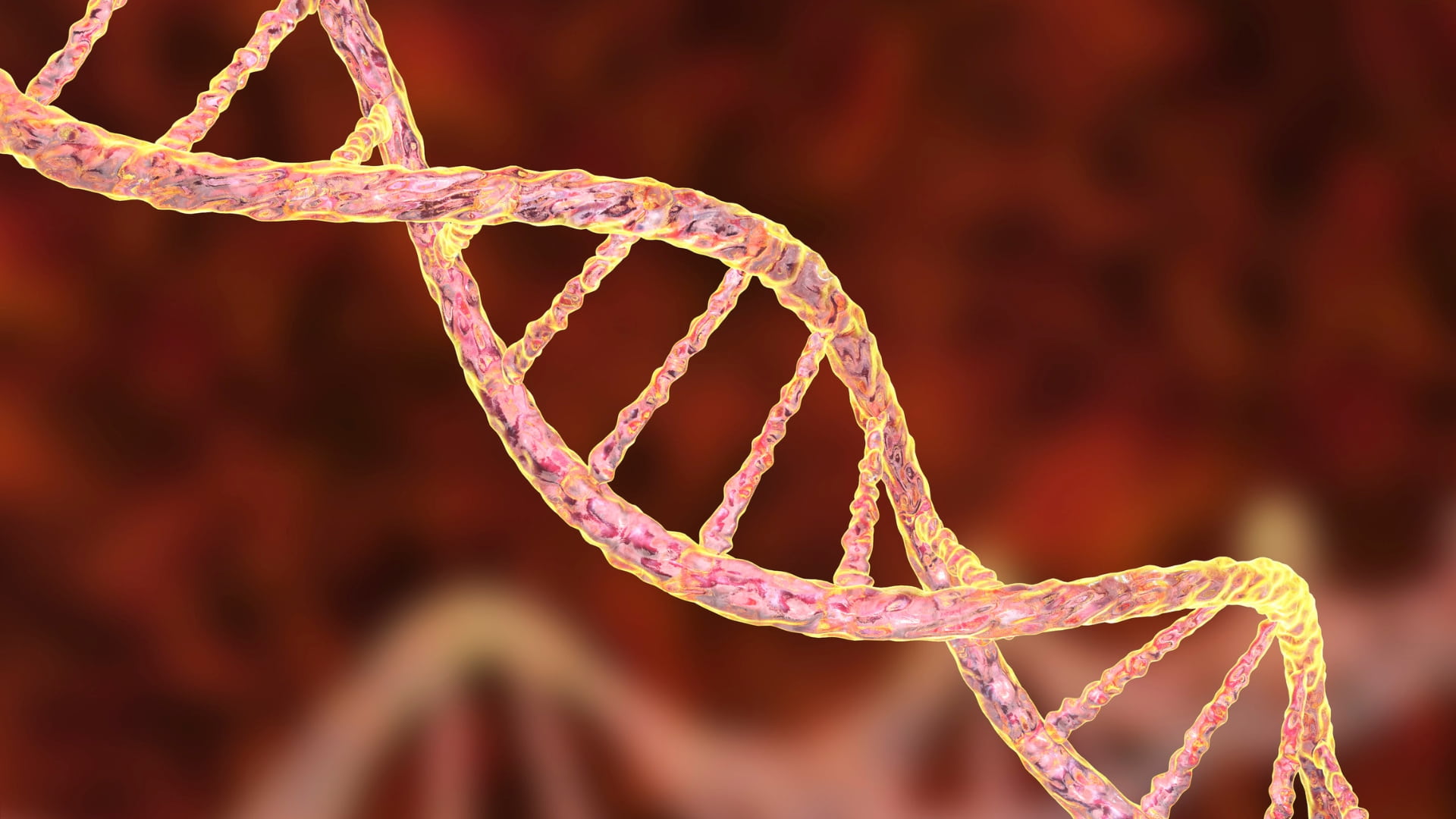
Redefining Life’s Genetic Dictionary Archaea Rewrite the Rules of Protein Synthesis

Scientists discover a rare amino acid code in archaea that challenges the universal genetic code, opening new avenues for biotechnology and protein engineering
SuryaSurya
4 mins read
Archaea repurpose TAG stop codon to encode pyrrolysine, creating a 21-amino-acid genetic code
Not Started

1. Context: Genetic Code and Protein Synthesis

The genetic code is a fundamental framework in molecular biology that links DNA sequences to amino acids, the building blocks of proteins. Established by the late 1960s, this code operates via triplet codons composed of four nitrogenous DNA bases—adenine (A), guanine (G), cytosine (C), and thymine (T). Out of the 64 possible codons, 61 encode 20 standard amino acids, while the remaining three function as stop codons that terminate protein synthesis. The universality of this code across organisms has long provided predictability in understanding gene-to-protein translation, critical for both basic biology and biotechnology applications.

However, deviations from this canonical genetic code are rare. Known exceptions include the bacterium Mycoplasma, where TGA encodes tryptophan, and humans, where TGA encodes selenocysteine in certain proteins. These exceptions highlight that genetic codes can evolve, offering organisms unique biochemical capacities that can be harnessed in applied sciences.

Understanding the universality and exceptions of the genetic code is crucial for genomics-based governance of bioengineering and synthetic biology. Ignoring these variations could lead to inaccurate protein predictions, impacting drug development, microbial biotechnology, and synthetic gene applications.


2. Discovery of the Pyl Code in Archaea

Recent research published in Science reports a previously unrecognised genetic code in certain archaea. In these organisms, the stop codon TAG is universally repurposed to encode the rare amino acid pyrrolysine (Pyl), rather than functioning as a termination signal. This “Pyl code” thus has 62 sense codons coding for 21 amino acids, leaving only two stop codons. The study focused on archaea such as Methanococcoides burtonii and Methanomethylophilus alvi, where mass spectrometry confirmed 54 previously unreported Pyl-containing proteins involved in DNA replication and energy metabolism.

This discovery challenges the assumption that stop codons serve solely as termination signals and suggests the need to reinterpret genomic data from these archaea to correctly predict protein sequences. It also expands the potential amino acid repertoire in living organisms, opening new avenues for molecular biology and synthetic biology.

Recognising non-standard genetic codes is vital for accurate genomic interpretation and biotechnological applications. Failure to account for such variations could undermine the precision of synthetic biology, protein engineering, and metabolic modelling.


3. Implications for Biotechnology and Protein Engineering

The study’s findings carry significant potential for bioengineering. By introducing the archaeal Pyl machinery into Escherichia coli, researchers demonstrated that bacteria could be engineered to incorporate Pyl at specified TAG codons. This provides a method to design proteins with new functionalities, such as improved catalytic properties, stability, or specificity. Such capabilities could transform industrial enzyme production, pharmaceuticals, and synthetic biology applications.

Impacts:

  • Enables site-specific incorporation of rare amino acids in proteins.
  • Facilitates the development of novel biomolecules with functional advantages.
  • Supports microbial production platforms for industrially valuable proteins.

Integrating non-standard genetic codes into microbial systems allows governance of synthetic biology innovations, ensuring the development of proteins with desired properties. Ignoring these advances could limit industrial competitiveness and scientific progress.


4. Research and Knowledge Gaps

Despite the discovery, several questions remain. The ecological and evolutionary significance of genome-wide Pyl incorporation is not fully understood. Researchers are investigating whether Pyl confers adaptive advantages in extreme environments, such as Antarctic lakes or the human gut. Understanding these mechanisms could inform evolutionary biology and guide targeted biotechnological exploitation.

Challenges:

  • Determining functional advantages of Pyl in archaea.
  • Assessing ecological and evolutionary roles of expanded genetic codes.
  • Scaling bioengineered systems for industrial or therapeutic applications.

Studying the functional role of rare amino acids ensures that biotechnological applications are sustainable and safe. Neglecting such studies may result in incomplete understanding of microbial physiology and suboptimal exploitation of genetic innovations.


5. Way Forward for Governance and Research

The discovery of the Pyl code underscores the dynamic nature of biological systems and their potential utility for biotechnology. Future research should focus on:

  • Mapping non-standard genetic codes across diverse microorganisms.
  • Developing predictive computational models to accurately translate genomic data.
  • Leveraging synthetic biology to create organisms capable of producing novel proteins with enhanced properties.

By systematically integrating these findings into biotechnology policy and research frameworks, governance can ensure responsible innovation, enhance industrial applications, and advance fundamental biological knowledge.

Incorporating these insights into policy and research strategies strengthens the foundation for next-generation protein engineering, industrial microbiology, and sustainable biotechnology development.


References and Notes for UPSC

  • Science (November 2025), Study on Pyl code in archaea.
  • Bose Institute, Kolkata; University of California, Berkeley.
  • Mass spectrometry-based protein identification.
  • Example organisms: Methanococcoides burtonii, Methanomethylophilus alvi.
  • Key terms: genetic code, codon, stop codon, sense codon, pyrrolysine (Pyl), protein engineering.

Quick Q&A

Everything you need to know

The genetic code refers to the set of rules by which sequences of DNA bases (A, G, C, T) are translated into amino acids during protein synthesis. Each amino acid is specified by a three-base sequence called a codon. Traditionally, biology recognises 64 codons, of which 61 encode 20 common amino acids, while three function as stop codons that terminate protein synthesis.

The discovery of the Pyl code in certain archaea fundamentally challenges this near-universality. In these organisms, the TAG codon—normally a stop signal—is always read as coding for the rare amino acid pyrrolysine (Pyl). This creates a genetic code with 62 sense codons encoding 21 amino acids and only two stop codons. The finding shows that the genetic code is not entirely frozen, but can be repurposed at a genome-wide level, reshaping our understanding of molecular evolution.

This discovery is significant because stop codons are considered among the most conserved elements of the genetic code. A genome-wide reassignment of a stop codon overturns the long-held assumption that deviations from the standard code are rare and limited to a few genes. It demonstrates that life can sustain and stabilise an alternative genetic logic without compromising viability.

From a broader perspective, this finding highlights how evolution can exploit molecular flexibility to confer adaptive advantages. It opens new questions about how genetic codes evolve, how translation machinery adapts, and whether similar hidden variants exist in other unexplored organisms. For UPSC aspirants, it underscores the importance of questioning assumed universals in biology and appreciating the dynamic nature of life.

The researchers first used computational genomics to identify nine archaeal lineages where TAG codons appeared frequently within genes, suggesting they could not be acting as stop signals. From these, they selected two representative species—Methanococcoides burtonii and Methanomethylophilus alvi—for experimental validation.

They then extracted proteins from these organisms and analysed them using mass spectrometry. This technique allowed precise identification of amino acids within proteins. The detection of pyrrolysine at positions corresponding to TAG codons in dozens of proteins confirmed that these archaea systematically interpret TAG as a sense codon. This combined computational–experimental approach provided robust evidence for the existence of the Pyl code.

The evolution of the Pyl code is likely linked to functional and ecological advantages. Pyrrolysine is known to play specialised roles in certain enzymes, particularly those involved in methane metabolism. For archaea living in extreme or specialised environments—such as Antarctic lakes or the human gut—the ability to incorporate Pyl more widely may enhance metabolic efficiency or stress tolerance.

Another factor could be evolutionary contingency. Once the translation machinery adapted to reliably read TAG as Pyl, reverting to the standard code would be costly. Over time, this alternative code may have become fixed across the genome. This illustrates how evolutionary pathways can lock in novel solutions when they prove sufficiently advantageous.

One major implication is that standard bioinformatics tools, which assume the universal genetic code, may mis-predict proteins in organisms using the Pyl code. TAG codons would be incorrectly interpreted as stop signals, leading to truncated or entirely wrong protein sequences. This calls for a re-evaluation of genome annotation pipelines for archaea and possibly other microbes.

However, the discovery also presents an opportunity. By recognising and incorporating alternative genetic codes, scientists can achieve more accurate protein predictions and deeper insights into microbial biology. The challenge lies in systematically identifying such exceptions without overcomplicating genomic analyses, balancing accuracy with practicality.

A concrete application lies in using microbes as protein factories. Researchers demonstrated this by engineering Escherichia coli to use archaeal machinery that reads TAG as pyrrolysine. As a result, the bacterium successfully produced a full-length protein containing Pyl at a desired position, rather than stopping synthesis prematurely.

This capability allows scientists to design proteins with novel chemical functionalities, potentially useful in medicine, industry, or materials science. For example, Pyl-containing enzymes could exhibit enhanced catalytic properties. Thus, the Pyl code bridges fundamental biology and applied biotechnology.

I would argue that alternative genetic codes represent a high-impact frontier area where basic science can directly fuel technological innovation. The Pyl code shows that nature already provides templates for expanding the genetic alphabet, which synthetic biology seeks to achieve artificially.

Further research could uncover new amino acids, novel enzymes, and adaptive mechanisms relevant to health, climate-resilient biotechnology, and industrial processes. From a policy perspective, investing in this area strengthens scientific self-reliance and positions the country at the cutting edge of next-generation biotechnology.

Attribution

Original content sources and authors

Sign in to track your reading progress

Comments (0)

Please sign in to comment

No comments yet. Be the first to comment!
