1. Human-Centric and Democratic Vision of AI
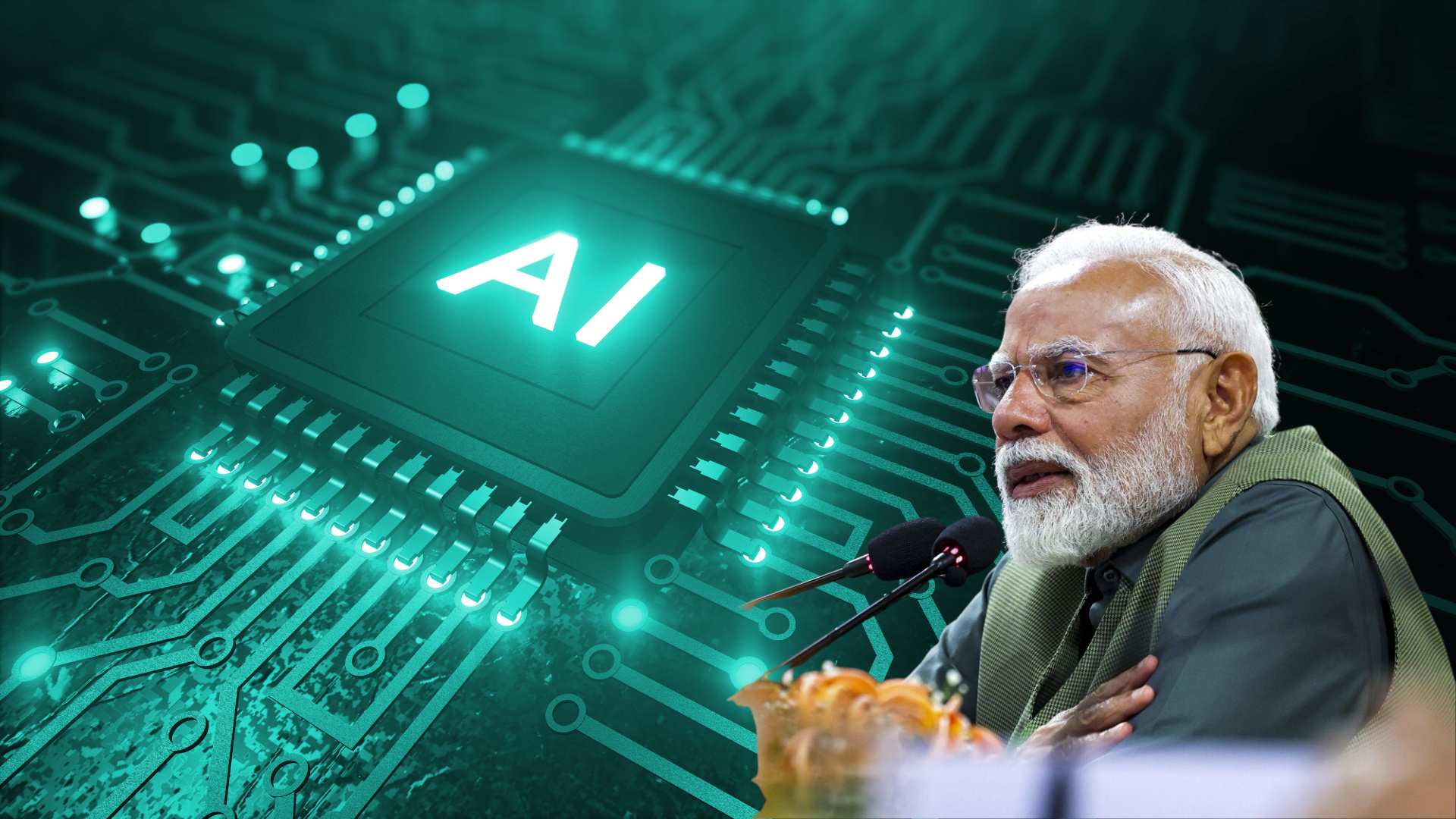
Artificial Intelligence is increasingly viewed as a transformative, general-purpose technology with economy-wide implications. At the AI Impact Summit in New Delhi, the Prime Minister emphasised that AI must be “human-centric” and its benefits should not be confined to early adopters or urban elites.
India’s AI strategy is anchored in three pillars: sovereignty, inclusivity, and innovation. The stated objective is for India to emerge among the top three global AI superpowers, not merely as a consumer but as a creator of AI technologies. This aligns AI development with the broader goal of Aatmanirbhar Bharat and technological self-reliance.
The Summit, positioned as the first such event hosted in the Global South, seeks to amplify under-represented voices and development priorities. The framing around “people, planet and progress” signals an effort to integrate ethical, developmental and sustainability concerns into AI discourse.
“Technology exists to serve humanity, not replace it.” — PM Narendra Modi
By embedding AI within a human-centric and development-oriented framework, India aims to prevent technological concentration and social exclusion. If AI adoption is left purely to market forces, it risks deepening inequality and eroding social trust.
2. AI, Employment and Skilling Imperatives
AI-driven automation has generated concerns about job displacement, especially among youth. The Prime Minister acknowledged these fears but argued that technological change historically alters the nature of work rather than eliminating it.
“Preparation is the best antidote to fear.” — PM Narendra Modi
The government’s response focuses on skilling and re-skilling to prepare the workforce for AI-driven transformations. AI is described as a “force-multiplier” capable of expanding productivity and creating new categories of employment, particularly in digital and technology sectors.
- AI market projections: India’s IT sector could reach $400 billion by 2030.
- Growth drivers: AI-enabled outsourcing and domain-specific automation.
Enterprise-grade AI adoption remains concentrated in specific sectors, implying that established IT firms continue to play a crucial intermediary role in complex business problem-solving.
Labour market adaptation depends on proactive skilling policies. Without workforce preparedness, AI-driven disruption could widen unemployment and income inequality, undermining inclusive growth.
3. AI for Inclusive Development: Bridging Divides
India’s approach emphasises AI as a tool to bridge urban–rural and socio-economic divides. The Prime Minister highlighted AI applications in agriculture, healthcare, education and heritage preservation.
A key example is the dairy cooperative Amul, which uses AI to provide 3.6 million women dairy farmers across thousands of villages with real-time guidance in Gujarati on cattle health and productivity. This illustrates AI’s potential to enhance grassroots productivity.
AI integration with Digital Public Infrastructure (DPI)—including Aadhaar—has been presented as a scalable development model for the Global South. The convergence of DPI and AI is described as the “next frontier” of inclusive growth.
“Technology must serve every citizen, regardless of geography, gender or income.” — PM Narendra Modi
When integrated with public digital infrastructure, AI can democratise access to services and opportunities. However, if benefits remain urban-centric, technological advancement may reinforce structural inequalities.
4. Bias, Diversity and Ethical Challenges
As AI adoption accelerates, risks also scale. AI systems can perpetuate biases related to gender, language and socio-economic background, particularly in a country as diverse as India.
India’s linguistic and cultural plurality creates unique vulnerabilities. Systems trained predominantly on English or urban datasets may underperform for rural users or speakers of regional languages, reinforcing digital exclusion.
The government has indicated efforts to address these challenges through:
- Development of diverse and inclusive datasets
- Emphasis on AI tools in regional languages
- Growing academic research on fairness and bias
The Prime Minister called for global cooperation to address systemic AI bias and ensure equitable outcomes.
Unchecked algorithmic bias can institutionalise discrimination at scale. Inclusive dataset development and fairness research are essential to prevent AI from replicating structural inequalities.
5. Institutional Framework: IndiaAI Mission and Capacity Building
India has adopted a structured approach through the IndiaAI Mission. The strategy integrates infrastructure, skilling, research and safety mechanisms.
- 4 Centres of Excellence in healthcare, agriculture, education and sustainable cities
- 5 National Centres of Excellence for Skilling
- Expanded support for data centres and cloud infrastructure in Union Budget 2026–27
- Continued push for semiconductor manufacturing and electronics PLI
These measures strengthen both hardware (compute capacity, semiconductor ecosystem) and human capital foundations.
AI leadership requires simultaneous development of compute infrastructure, research capacity and skilled manpower. Fragmented policy efforts would limit competitiveness and technological sovereignty.
6. Safety, Regulation and Global Governance
The Prime Minister underscored the need for effective human oversight and safeguards, calling for a global compact based on:
- Human oversight
- Safety-by-design
- Transparency
- Prohibition of AI use for deepfakes, crime and terrorism
India has launched the IndiaAI Safety Institute (January 2025) to promote ethical and responsible AI deployment. Additionally, rules have been notified requiring:
- Watermarking of AI-generated content
- Removal of harmful synthetic media
The emerging risk framework addresses national security concerns and harms to vulnerable groups, including women, children and the elderly.
Balancing innovation with regulation is central to sustainable AI governance. Over-regulation may stifle innovation, while under-regulation risks societal harm and erosion of public trust.
7. Global South Leadership and Strategic Positioning
India positions itself as a representative voice for the Global South in AI governance. Hosting the AI Impact Summit reflects an effort to shape global norms around equitable access, inclusive datasets and developmental applications.
By linking AI to “Sarvajan Hitay, Sarvajan Sukhaye” (welfare for all), the government frames technology as a tool for collective progress rather than concentrated power.
This strategy enhances India’s soft power while integrating AI into broader geopolitical and economic objectives, including digital sovereignty and strategic autonomy.
Norm-setting in emerging technologies confers strategic influence. If India fails to engage proactively in global AI governance, regulatory frameworks may evolve without reflecting its developmental priorities.
Conclusion
India’s AI strategy seeks to combine innovation, inclusion and safeguards, positioning AI as a catalyst for economic growth and social equity. With projections of a $400 billion IT sector by 2030, expanding infrastructure and institutional frameworks, the country aspires to global leadership while emphasising ethical oversight.
The long-term success of this approach will depend on effective skilling, inclusive datasets, robust safety mechanisms and sustained international engagement, ensuring that AI advances both national development and global equity.