
Introduction
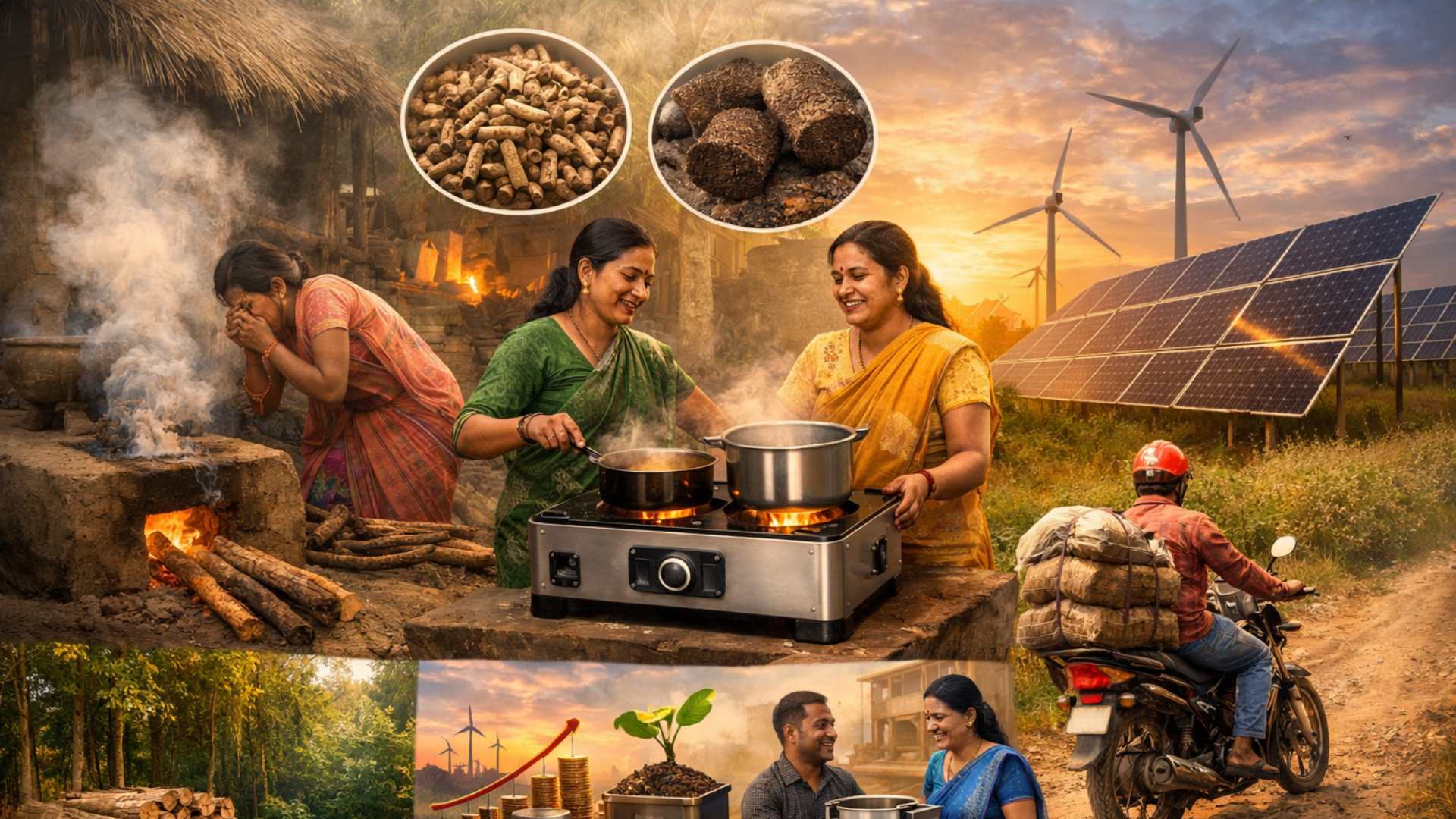
India's Pradhan Mantri Ujjwala Yojana (PMUY) connected over 10 crore BPL households to LPG since 2016 — yet refill rates remain dismally low (~3–4 cylinders/year vs. the national average of 6+), pushing rural households back to biomass. With commercial LPG exceeding ₹100/kg in major cities amid the ongoing supply crunch, Improved Cookstoves (ICS) — a technology that merges traditional biomass use with modern combustion engineering — are re-emerging as a critical energy bridge. Nearly 660 million Indians still rely on solid biomass for cooking (IEA), making this not merely an energy issue but a public health, gender, and climate crisis simultaneously.
"Household air pollution from solid fuels is responsible for approximately 600,000 premature deaths annually in India." — WHO Global Health Observatory
Traditional vs. Improved Cookstoves: Key Comparison
| Parameter | Traditional Chulha | Improved Cookstove (ICS) |
|---|---|---|
| Thermal efficiency | ~10% | 38%–45% |
| Fuel consumption | High (baseline) | Reduced by 50–66% |
| Smoke/particulate matter | Very high | Significantly reduced |
| CO₂ equivalent emissions | High | Low–moderate |
| Fuel flexibility | Firewood only | Firewood, pellets, briquettes, agri-waste |
| Cost (household) | Near zero (mud stove) | ₹2,000–₹20,000+ |
| Carbon credit eligibility | No | Yes |
Sustainability of Firewood-Based Cooking
Conditions for sustainability:
- Harvest rate must not exceed forest regrowth rate
- Shift from raw firewood → processed biomass (pellets, briquettes from sawdust/agricultural waste)
- ICS reduces wood needed per meal — easing extraction pressure on forests
Alternative biomass fuels widening the base:
| Fuel Type | Source | Advantage |
|---|---|---|
| Wood pellets | Sawdust, wood waste | Uniform combustion, low smoke |
| Briquettes | Agricultural residue | Uses crop waste, reduces stubble burning |
| Dung cakes | Livestock waste | Widely available in rural India |
| Crop residue | Rice husk, sugarcane bagasse | Zero additional cost |
Cost Economics: ICS vs. LPG
| Parameter | LPG (Commercial) | Firewood + ICS |
|---|---|---|
| Fuel cost | ₹100+/kg | ~₹10/kg (purchased) |
| Cooking energy equivalence | 1 kg LPG | ~4 kg firewood (in ICS) |
| Effective cost per unit energy | ₹100 | ~₹40 |
| Potential household savings | Baseline | 60%+ cost reduction |
| Upfront equipment cost | Negligible (stove provided) | ₹2,000–₹20,000 |
| Payback period | — | Short (months, not years) |
Financing pathways for affordability:
- Microfinance institution (MFI) partnerships
- CSR funding from corporates
- Carbon credits — emissions savings converted into tradeable credits, subsidising stove cost for low-income families
Health & Gender Dimensions
Health impact of traditional chulhas:
- Particulate Matter (PM2.5) levels inside traditional kitchens can be 15–20x WHO safe limits
- Linked to chronic obstructive pulmonary disease (COPD), lung cancer, and low birth weight
- Women and children — who spend most time near the cooking fire — bear disproportionate health burden
Gender-drudgery nexus:
- Return to firewood increases women's unpaid labour — collecting wood can take 2–5 hours/day in resource-scarce areas
- ICS's 50%+ fuel efficiency directly reduces collection time
- Reduced smoke → reduced eye and respiratory ailments → improved women's productive capacity
NCERT link: Class 10 Social Science — "Gender, Religion and Caste" — unpaid domestic labour and women's time poverty
Policy & Programme Landscape
| Scheme | Details | Gap |
|---|---|---|
| PMUY (Ujjwala) | 10 crore LPG connections to BPL | Low refill rates — affordability barrier |
| National Biomass Cookstoves Programme (NBCP) | BEE-led ICS promotion | Weak last-mile implementation |
| MNRE Biomass Programme | Briquette/pellet promotion | Limited rural reach |
| Carbon credit frameworks | ICS eligible under Gold Standard/VCS | Underutilised in India |
Supply Chain for Mass Adoption: What Is Actually Needed
What is NOT needed:
- Massive centralised infrastructure investment
- New fuel supply chains (biomass already locally available)
What IS needed:
| Requirement | Action |
|---|---|
| Distribution networks | Strengthen last-mile logistics via SHGs, FPOs |
| Local manufacturing | Promote cottage-level ICS production |
| User awareness | Behaviour change communication — especially for women |
| After-sales support | Repair networks, spare parts availability |
| Quality standards | BEE star-rating system for ICS — enforce compliance |
| Carbon finance | Link ICS distribution to verified carbon credit markets |
Environmental Co-benefits
- Reduced deforestation pressure when ICS + sustainable sourcing combined
- Lower Black Carbon emissions — significant climate co-benefit
- Crop residue use in briquettes reduces stubble burning — addresses North India air quality crisis
- ICS adoption earns carbon credits under international climate frameworks (Gold Standard, Verra VCS)
Way Forward
- Revive and restructure NBCP with mandatory quality certification and last-mile delivery targets
- Integrate ICS with PMUY — offer ICS as a backup/complement, not competitor, to LPG
- Link ICS to carbon markets — create a domestic carbon credit mechanism for rural cookstove programmes
- SHG-led distribution model — leverage women's self-help groups for awareness, sales, and after-sales service
- Standardise biomass briquette supply chains — connect agricultural waste aggregators to ICS manufacturers
- Include ICS in National Clean Air Programme (NCAP) metrics — indoor air quality alongside outdoor
Conclusion
The return to firewood amid India's LPG crisis need not be a regression — it can be a technology-mediated transition if managed correctly. Improved cookstoves sit at the intersection of energy access, climate action, public health, and women's empowerment. They are not a permanent solution to India's clean cooking challenge, but they are a pragmatic, affordable, and immediately deployable bridge. The policy failure so far has not been technological — ICS works — but institutional: weak distribution, absent financing, and poor behaviour change outreach. Fixing these systemic gaps costs far less than the health and gender toll of doing nothing.
